
County Officials Brief Legislators on Mental Health Funding and Walk-in Crisis Centers
News Date: Wednesday, May 6, 2026
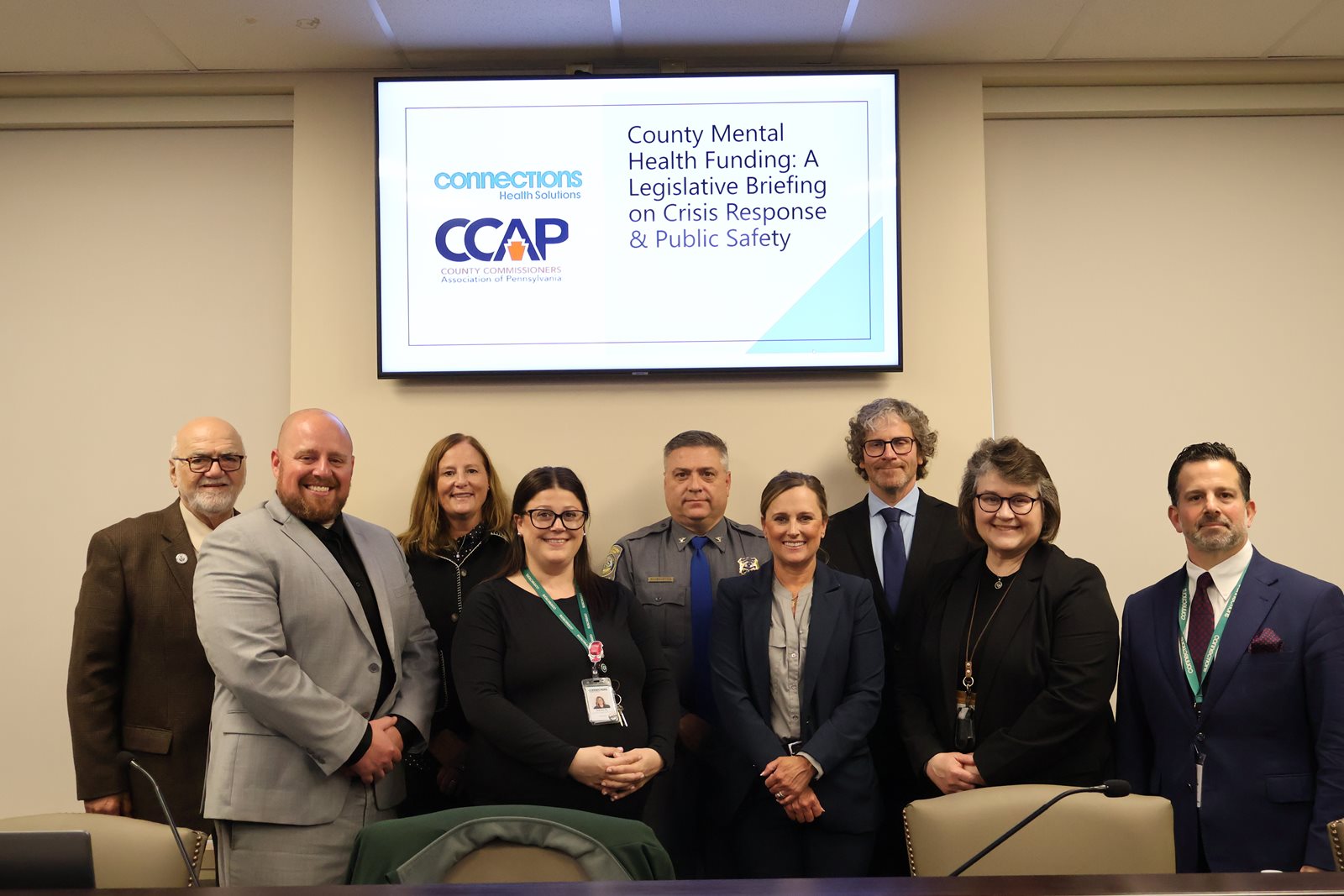
Targeted state investment would allow counties to strengthen and expand crisis services
The County Commissioners Association of Pennsylvania (CCAP) partnered with the Connections Health Solutions Crisis Walk-In Center at the State Capitol Wednesday to lead a discussion on the need for sustained and enhanced county mental health funding, and its impact on public safety, corrections, and essential government services.
“Securing additional investment in the county-based mental health system remains one of counties’ top priorities this year,” said CCAP Executive Director Dr. Kyle Kopko. “This issue continues to be urgent as demand for services grows. In Fiscal Year 2024–2025, counties served an estimated 723,600 residents across mental health programs—an increase of 2 percent over the prior year.”
The panel consisted of nine subject matter experts, including:
The Harrisburg-based Connections Emergency Behavioral Health Crisis Walk-in Center specializes in providing immediate access to behavioral health crisis care. Their mission is to offer compassionate, person-centered treatment to individuals experiencing mental health crises, ensuring that each person receives the care and support needed to begin their path to recovery.
“The walk-in center is a testament to what can be achieved when communities come together to prioritize mental health and substance use disorder treatment,” said Chris Santarsiero, Vice President of Government Affairs at Connections Health Solutions. “However, for it to be sustainable, we are asking the legislature for additional state funding to support counties mental health crisis centers receive the resources necessary to fulfill this gap in high quality community-based behavioral health services
Targeted state investment would allow counties to strengthen and expand crisis services, with a primary focus on crisis walk-in centers, which provide immediate, in-person care and reduce reliance on emergency rooms and law enforcement facilities.
“Mental health issues do not know boundaries,” said Commissioner Campbell. “With Connections, they are focused and ready to deal with folks that are having a mental crisis the prisons aren't really set up for type of emergency.”
“Individuals and their families have the ability to go to Connections and meet with individuals and staff who are trained in behavioral health services,” said DeSanto. “It’s the opposite of an emergency room, which by nature is very chaotic.
Since the expiration of insurance credits, Pennsylvania’s crisis walk-in centers have experienced an 18% increase in the number of individuals without insurance coverage. This loss of coverage is having a direct impact on county crisis services.
“Additional state funds will ensure these new and impactful services will benefit the broader community by serving individuals in crisis regardless of need, insurance coverage or time of day and solve the ‘divert to what’ problem getting individuals the treatment they need quickly,” Santarsiero said.
“Securing additional investment in the county-based mental health system remains one of counties’ top priorities this year,” said CCAP Executive Director Dr. Kyle Kopko. “This issue continues to be urgent as demand for services grows. In Fiscal Year 2024–2025, counties served an estimated 723,600 residents across mental health programs—an increase of 2 percent over the prior year.”
The panel consisted of nine subject matter experts, including:
- Justin Douglas, Dauphin County Commissioner
- Frank Campbell, Perry County Commissioner
- Kelly Callihan, District Attorneys Association Executive Director
- Gregory Briggs, Dauphin County Warden
- Chris Raubenstine, Silver Spring Township Chief of Police
- Autumn Lupey, Lower Paxton Township Police Lieutenant
- David DeSanto, Dauphin County MHADP Administrator
- Annie Strite, MH IDD Administrator and Mental Health Director, Cumberland and Perry County
- Chris Santarsiero, Vice President of Government Affairs at Connections Health Solutions
The Harrisburg-based Connections Emergency Behavioral Health Crisis Walk-in Center specializes in providing immediate access to behavioral health crisis care. Their mission is to offer compassionate, person-centered treatment to individuals experiencing mental health crises, ensuring that each person receives the care and support needed to begin their path to recovery.
“The walk-in center is a testament to what can be achieved when communities come together to prioritize mental health and substance use disorder treatment,” said Chris Santarsiero, Vice President of Government Affairs at Connections Health Solutions. “However, for it to be sustainable, we are asking the legislature for additional state funding to support counties mental health crisis centers receive the resources necessary to fulfill this gap in high quality community-based behavioral health services
Targeted state investment would allow counties to strengthen and expand crisis services, with a primary focus on crisis walk-in centers, which provide immediate, in-person care and reduce reliance on emergency rooms and law enforcement facilities.
“Mental health issues do not know boundaries,” said Commissioner Campbell. “With Connections, they are focused and ready to deal with folks that are having a mental crisis the prisons aren't really set up for type of emergency.”
“Individuals and their families have the ability to go to Connections and meet with individuals and staff who are trained in behavioral health services,” said DeSanto. “It’s the opposite of an emergency room, which by nature is very chaotic.
Since the expiration of insurance credits, Pennsylvania’s crisis walk-in centers have experienced an 18% increase in the number of individuals without insurance coverage. This loss of coverage is having a direct impact on county crisis services.
“Additional state funds will ensure these new and impactful services will benefit the broader community by serving individuals in crisis regardless of need, insurance coverage or time of day and solve the ‘divert to what’ problem getting individuals the treatment they need quickly,” Santarsiero said.